
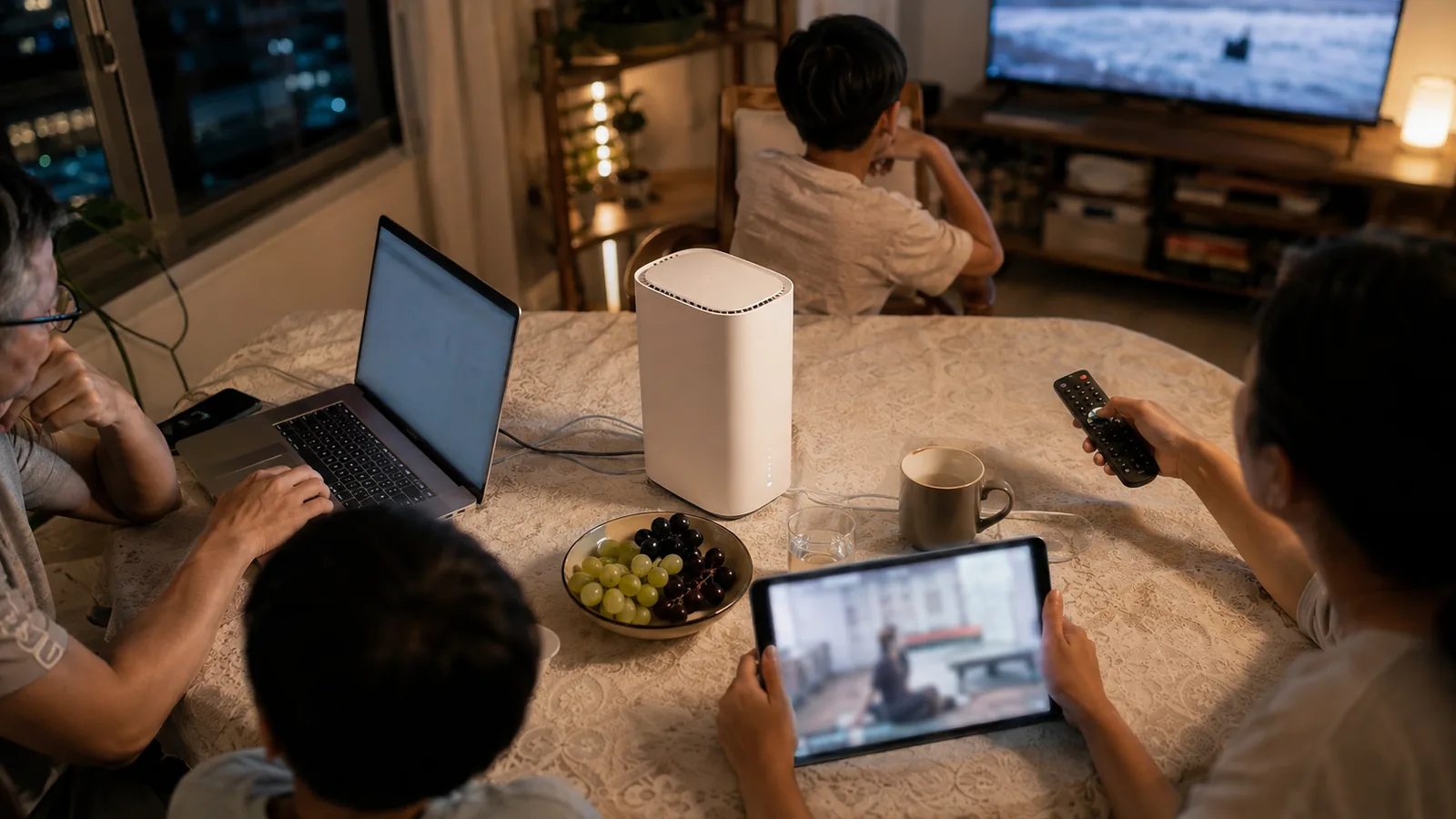
Like mobile plans, 'unlimited data' on 5G home broadband can mean different things. Some plans let you keep using data after a set amount, but lower your network priority. Others state a maximum speed afterwards. Some bury the fair usage policy in separate terms. The key isn't whether the ad says 'unlimited' — it's what happens after the threshold, when it resets, and whether peak-hour congestion affects your core usage.
First, distinguish four types of terms
| Wording | Usually means | What to ask |
|---|---|---|
| Still usable after specified GB | Service won't be cut off immediately | Is it throttled, deprioritised, or both? |
| Lower network priority | May be affected first during congestion | Does it recover off-peak? When does it reset? |
| Maximum speed afterwards | A clear speed cap | Is upload capped the same? Can you buy full-speed data? |
| Subject to fair usage policy | Detailed rules in another document | Ask for the document version and applicable plan codes |
SmarTone's September 2025 fair usage policies for 300GB and 500GB state that after exceeding the respective usage, you can continue using until the next billing cycle, but your priority for network resources will be relatively lower, which may affect the experience. This doesn't mean 'stop after use' or a guaranteed consistent speed all month. Another trial plan's terms cite 200GB as an example, again stressing that you must check the document for your specific plan — don't apply other thresholds to your contract.
Is 300GB or 500GB enough? Start with a household usage audit
- TV & streaming: quality, daily hours, and simultaneous streams.
- Work & study: video calls, cloud sync, large file uploads/downloads.
- Gaming: new game and system updates often use more data than actual play.
- Photos & phone backups: new phone restore, cloud albums, NAS sync.
- Smart home & CCTV: continuous cloud uploads?
- Guests & multiple users: weekends, holidays, and kids streaming for long hours.
The most practical approach is to check your full month's usage from your existing router or broadband account, not guess. If you can't see it, track normal usage for seven consecutive days, estimate a month based on weekday/weekend ratios, and leave buffer for updates, holidays, and new devices. If your threshold just meets your average usage, you'll likely enter the FUP zone in heavy months.
How deprioritisation may actually show up
Deprioritisation is most noticeable during network congestion: at the same location and router, off-peak may be fine, but when many people are online nearby, you may feel speed or latency fluctuations. The actual management depends on the operator's terms and network conditions — don't assume a fixed speed. If you game, stream, or run multiple TVs every evening, treat the post-FUP peak-hour experience as a core risk.
When comparing plans, don't just sort GB from high to low
| Household type | Prioritise comparing | Common blind spots |
|---|---|---|
| 1-2 people, general browsing | Contract, router, and lower-threshold plans | Signing longer contracts for data you won't use |
| Multi-streaming / WFH | Higher thresholds, upload, and peak-hour real-world tests | Only looking at download peaks |
| Heavy downloading / cloud backup | Clear post-FUP handling and top-up options | Treating 'unlimited' as always same speed |
Seven answers to note down before signing
- Monthly data threshold for full speed or normal priority.
- What happens after the threshold: fixed throttle, deprioritisation, or other management.
- Whether upload and download are affected equally.
- When the threshold resets each billing cycle.
- Whether you can buy extra data, and the price and activation method.
- Usage alerts via app, SMS, or bill.
- Terms document name, version date, and applicable plan.
GoPlan's advice: look at threshold, contract, and router together
A higher data threshold isn't always the best deal, because monthly fee, contract length, router rental/purchase, and trial arrangements all change the total cost. Below are several 5G home broadband plans from GoPlan's current sources with different data and hardware focuses. Narrow down by your household usage, click through to check the data date, then get the latest FUP document from the operator.